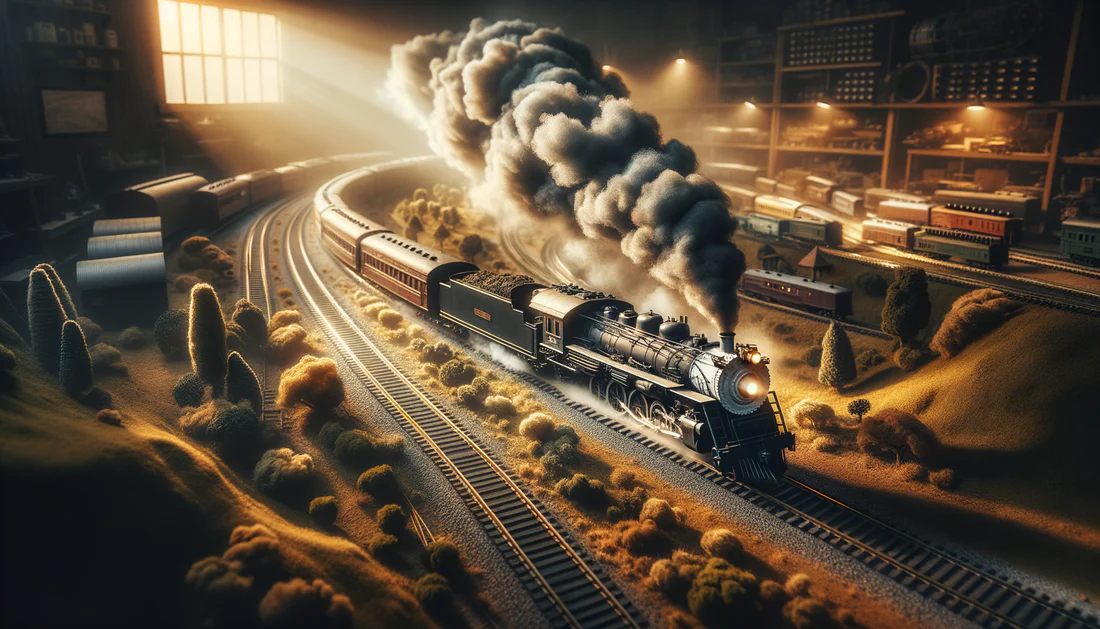
Envisioning Your Miniature World: The Importance of Planning
Great layouts start long before you lay the first piece of track. If you want reliable operation and a scene that feels believable, begin with model railroad layout planning tips that turn ideas into a buildable plan. Planning helps you avoid tight curves, unreachable track, and costly rework. It also keeps your purchases compatible, which matters when you start mixing locomotives, rolling stock, track systems, and power. At BYMRR Train Store, we focus on curated, premium components that support your vision from day one. When you plan first, you transform your imagination into a living miniature railroad world—one decision at a time.
Defining Your Model Railroad Goals and Inspiration
Start by deciding what “success” looks like for you. Do you want continuous running to relax after work, or switching moves that feel like real railroad jobs? Write down three goals, such as “run two trains at once,” “include a small yard,” or “model a mountain pass.” Then collect inspiration photos of towns, industries, bridges, and track arrangements. These model railroad layout planning tips keep you focused when choices multiply. If you love craftsmanship, choose scenes that reward detailing, like a depot area or a freight spur. If you prefer operations, plan for sidings and industries that create repeatable tasks. Your goals will guide every purchase and every inch of track.
Choosing a Scale and Theme That Fits Your Vision
Scale sets the tone for your entire build. Larger scales make detailing easier, while smaller scales let you fit more railroad into the same space. Pick a scale that matches your eyesight, patience for fine work, and available room. Next, choose a theme: modern freight, classic steam, short line switching, passenger service, or a mixed-era “what if” railroad. Strong model railroad layout planning tips always connect theme to equipment. A theme helps you select realistic locomotives and railcars that look right together. It also shapes your scenery choices, from desert rock cuts to forested hills. When scale and theme align, your layout feels cohesive instead of random.
Balancing Available Space With Ambitious Ideas
Measure your space and commit to a footprint you can actually reach across. Access is a planning skill, not an afterthought. Keep aisles comfortable, and avoid placing key track more than an arm’s length from the edge. One of the most useful model railroad layout planning tips is to design around “reach and rescue.” You will need to rerail cars, clean track, and fix couplers. If you have limited space, choose a shelf layout, an L-shape, or a compact tabletop with a clear operating concept. If you have more room, plan for broader curves and longer sidings. Big dreams work best when the space supports them.
Essential Tools and Materials for Beginners
Once your plan has a direction, build a practical shopping list. Beginners often buy impressive locomotives first, then discover they lack the track, power, and tools to run them well. Use model railroad layout planning tips to prioritize the foundation: track geometry, power delivery, and a few reliable cars. You can add scenery and specialty details later. Focus on quality where it improves operation, such as track and electrical connections. A curated approach also reduces compatibility worries, which is a common objection for new builders. With the right basics, you’ll spend more time running trains and less time troubleshooting.
Curated Starter Kits: What You Really Need
A smart starter kit is less about “more pieces” and more about the right pieces. Look for track components that match your plan, not a random assortment. At minimum, you need a stable base, track, a power source, wire, and a few hand tools. Add a track gauge, hobby knife, small files, and adhesive suited to your materials. If you build plastic structures, a dependable cement like Testors 281216 Liquid Cement for Plastic helps you create clean joints. The best model railroad layout planning tips also recommend labeling storage bins early. Organized parts prevent lost time and reduce damage to delicate details.
Understanding Track Systems and Power Supplies
Track and power choices affect everything from smooth starts to slow-speed switching. Decide whether you want traditional DC control or DCC for independent locomotive control. DCC adds flexibility, especially if your plan includes multiple trains or sound. Track systems vary by rail height, joiner style, and geometry. Choose one system and stay consistent to avoid fit issues. These model railroad layout planning tips will save you frustration: plan feeder wires, avoid relying only on rail joiners for power, and keep curves broad when possible. A solid power supply and clean wiring make even a small layout feel professional.
Quality Matters: Selecting Realistic Locomotives and Railcars
Reliable operation starts with well-made equipment. Choose locomotives with smooth low-speed performance, good pickup, and durable gearing. Select rolling stock with consistent couplers and free-rolling trucks. If your theme is steam-era, a project like a Build Your Own Big Boy Steam Train Model Kit can become a centerpiece that motivates your whole build. Use model railroad layout planning tips to match car lengths to your curve radius and siding lengths. Long passenger cars need broader curves, while short freight cars handle tighter industrial trackage. When your equipment fits your plan, you get fewer derailments and more realistic movement.
Mapping Out Your Layout: Design Fundamentals
Now you turn ideas into a track plan you can build. Sketch your layout full size on paper, foam board, or with planning software. Mark reach zones, scenery areas, and where you’ll stand to operate. Strong model railroad layout planning tips emphasize “flow.” Trains should have a reason to go somewhere, even on a small layout. Think in scenes: a town, an industry, a bridge crossing, or a yard lead. Keep turnouts accessible and avoid hiding complicated track where you can’t fix it. A clean plan makes construction faster and operation more satisfying.
Track Planning: Loops, Sidings, and Switching Scenarios
Choose a track style that matches your goals. A continuous loop is great for relaxed running and testing locomotives. Add a passing siding to run two trains or to stage meets. If you enjoy operations, include spurs to industries and a small yard for sorting cars. These model railroad layout planning tips help you design smarter: keep your mainline clear of switching moves, add a runaround track when you have facing-point spurs, and plan a yard lead so you can switch without blocking the main. Even a simple plan can deliver hours of realistic switching scenarios.
Maximizing Detail in Small Spaces
Small layouts shine when you focus on depth and storytelling. Use selective compression by modeling the “signature” parts of a scene, like a depot platform, a grain elevator, or a warehouse loading dock. Place structures at angles to avoid a flat, toy-like look. Add view blocks, such as a row of buildings or a low hill, to create the feeling of distance. Model railroad layout planning tips for compact spaces also include using shorter trains and tighter operating areas on purpose. When you design for the space you have, your railroad feels intentional and immersive.
Incorporating Elevations, Bridges, and Scenic Elements
Elevation changes add drama, but they require careful planning. Keep grades gentle so your locomotives can pull trains without slipping. Use risers or foam inclines to create smooth transitions, and avoid sudden vertical curves at turnouts. Plan bridges where they make sense, such as crossing a river, road, or ravine. These model railroad layout planning tips will keep operations reliable: maintain clearance for rolling stock, support bridge approaches firmly, and test with your longest car. Scenic elements like rock cuts, retaining walls, and trestles look best when the track alignment feels natural.
Building Your Foundation: Step-by-Step Assembly Tips
With a plan in hand, you can build in a sequence that prevents headaches. Start with the benchwork and base, then lay track, then wire, and only then move into scenery. This order supports testing at every stage. Model railroad layout planning tips often fail when builders rush to scenery before trains run smoothly. You want dependable trackwork first, because it’s hard to fix once you add ballast and structures. Work in small zones, test frequently, and keep notes on what you changed. A steady build pace produces a layout that runs as good as it looks.
Creating a Stable and Level Base
A stable base protects your track alignment and keeps grades consistent. Use sturdy lumber or quality foam with proper framing. Check level across the surface, especially where turnouts and crossings will sit. If you plan elevations, mark them clearly and build supports that won’t sag over time. One of the most practical model railroad layout planning tips is to plan access hatches or removable sections for hard-to-reach areas. Also plan where your control panel or throttle area will go, so you don’t end up with cords crossing your operating space. A solid foundation makes every next step easier.
Track Laying Techniques For Reliable Operation
Lay track slowly and test constantly. Start with the mainline, then add turnouts, then sidings and spurs. Keep curves smooth by using flex track carefully and avoiding kinks at rail joiners. Use a track gauge to confirm spacing through curves and turnouts. These model railroad layout planning tips reduce derailments: keep turnouts on straight sections when possible, avoid S-curves without a straight “buffer” between them, and secure track evenly so it doesn’t twist. Before you ballast, run your least forgiving locomotive at slow speed. If it runs well, everything else usually will too.
Wiring Basics: Powering Your Locomotives Safely
Good wiring is simple when you plan it. Use a main bus wire under the layout and add feeder wires to sections of track, especially on larger layouts or where you have many turnouts. Keep connections neat and labeled. If you use DCC, follow the manufacturer’s guidance for wire gauge and circuit protection. Model railroad layout planning tips for wiring also include separating accessory power from track power when you add lights or switch machines. Always test for shorts before running trains. Safe, consistent power delivery gives you smooth starts, steady speed, and fewer mysterious stalls.
Bringing Your Railroad to Life: Scenery and Detailing
Once trains run reliably, scenery turns your track plan into a world. Work from the “big shapes” to the small details. Start with terrain forms, then ground cover, then roads and water, and finally the fine details that reward close viewing. Model railroad layout planning tips apply here too, because scenery should support your theme and operating plan. Leave clearance around turnouts and keep critical track areas accessible for cleaning. When you build scenery in layers, you can adjust colors and textures until the scene feels natural. This is where you truly create your own new world.
Immersive Scenery Materials for Realism
Choose materials that match your region and era. Use foam, plaster cloth, or carved insulation board for landforms. Add realistic textures with ballast, fine turf, static grass, and rock castings. Blend colors to avoid a single-tone look. These model railroad layout planning tips help scenery look believable: vary ground cover density, add drainage ditches along roads, and weather ballast near yards and industries. Keep a small test board to try mixes before committing to the layout. Immersive scenery doesn’t require complexity. It requires consistency, layering, and patience.
Adding Structures, Figures, and Accessories
Structures create purpose. Place industries where cars can be spotted, and add loading docks, tanks, and pallets to show what the railroad serves. Use figures sparingly and group them in natural places, like platforms, crossings, and work sites. Add details that support your story, such as signage, fencing, and utility poles. Model railroad layout planning tips for structure placement include leaving space for roads and parking, aligning doors with spurs, and keeping sightlines open for operators. When accessories match the scene, your railroad feels active, not staged.
Personalizing Your World with Unique Touches
Your layout becomes memorable when it includes personal details. Add a hometown building, a favorite bridge style, or a fictional short line name. Use subtle weathering to show age and use, and keep it consistent with your era. If you enjoy building, kitbashing a structure or customizing a car can become a signature feature. These model railroad layout planning tips keep personalization practical: avoid blocking access with delicate details, keep removable scenic sections near tricky track, and document your paint mixes for future touch-ups. Personal touches transform a good layout into your layout.
Next Steps: Expanding, Learning, and Connecting With Community
After your first section runs well, you can expand with confidence. Add staging tracks, a longer passing siding, or a new industry that changes your operating patterns. Keep using model railroad layout planning tips as you grow, because every addition affects reliability and access. Expansion works best when you upgrade in phases and test each change. You can also deepen realism with better lighting, improved control systems, and more refined scenery. The hobby rewards steady learning, and you’ll improve fastest when you share progress and ask questions.
Upgrading Locomotives and Layout Features
Upgrade with a purpose. If switching is your focus, improve slow-speed control and add more turnouts and industries. If you run longer trains, broaden curves and extend sidings. Consider adding sound or lighting once your wiring is stable. Model railroad layout planning tips for upgrades include checking compatibility before you buy and measuring clearances before you install. Small improvements can make a big difference, like better couplers, metal wheelsets, or additional feeders. Choose upgrades that reduce maintenance and increase operating enjoyment.
Educational Resources and Tutorials for Continued Growth
Skill-building keeps the hobby fresh. Learn track weathering, ballast techniques, basic electronics, and scenery layering. Follow step-by-step tutorials and repeat techniques on a test piece before applying them to the layout. Model railroad layout planning tips become more powerful when paired with practice, because you start predicting issues before they appear. Keep a simple build journal with notes on what worked, what didn’t, and what you want to try next. Over time, your layout will show your growth in craftsmanship and planning.
Engaging With Fellow Enthusiasts and Sharing Your Progress
Community support makes projects easier and more fun. Share photos, ask for feedback on track plans, and learn from other builders’ solutions. When you describe your goals and space clearly, you’ll get more useful advice. Model railroad layout planning tips often improve through conversation, because someone else may spot a reach problem or a tight curve you missed. Celebrate small milestones, like your first smooth lap or your first successful switching session. Every layout is a journey, and you don’t have to build alone.
Ready to Create Your Own New World?
If you’re ready to move from ideas to a layout that runs reliably, start with a plan and build in smart stages. Use these model railroad layout planning tips to choose compatible components, design for access, and test as you go. BYMRR Train Store exists to help you transform your imagination into a living miniature railroad world with curated, premium products and supportive resources. Your first layout doesn’t need to be huge. It needs to be thoughtful, reliable, and built around what you love most about the hobby.
Explore BYMRR’s Curated Selection for Beginners
When you’re ready to shop, focus on the essentials that support your plan: precision track, dependable power, realistic locomotives, and rolling stock that fits your curves and sidings. Add scenery and structures that match your theme and era. BYMRR Train Store offers a curated collection designed to help enthusiasts build with confidence. Use your plan as your checklist, and you’ll avoid compatibility surprises. With the right foundation, every new detail becomes easier to add and more satisfying to operate.
Join Our Community and Transform Your Imagination
Share your progress, ask questions, and keep learning as you build. The best layouts evolve through small improvements and steady inspiration. Keep refining your scenes, your operations, and your craftsmanship. Most importantly, keep enjoying the process of creating. Visit bymrr.store to explore products and resources that support your next step. Create Your Own New World—one track section, one scene, and one great operating session at a time.